Shopping Cart
No item in your cart!
RM0.00
View Cart


You have cut out spicy food. You have taken the antacid. Things settle for a few days, then the discomfort is back as though you changed nothing. For many people in Malaysia, this cycle repeats without any clear reason why.
Part of that comes down to how "gastric" gets treated as a catch-all. Because the word covers so many different symptoms, it is easy to reach for whatever seems to help. An antacid for the burning. A dietary change for the bloating. But without finding out what is actually causing the problem, things only settle for a while before the discomfort comes back.
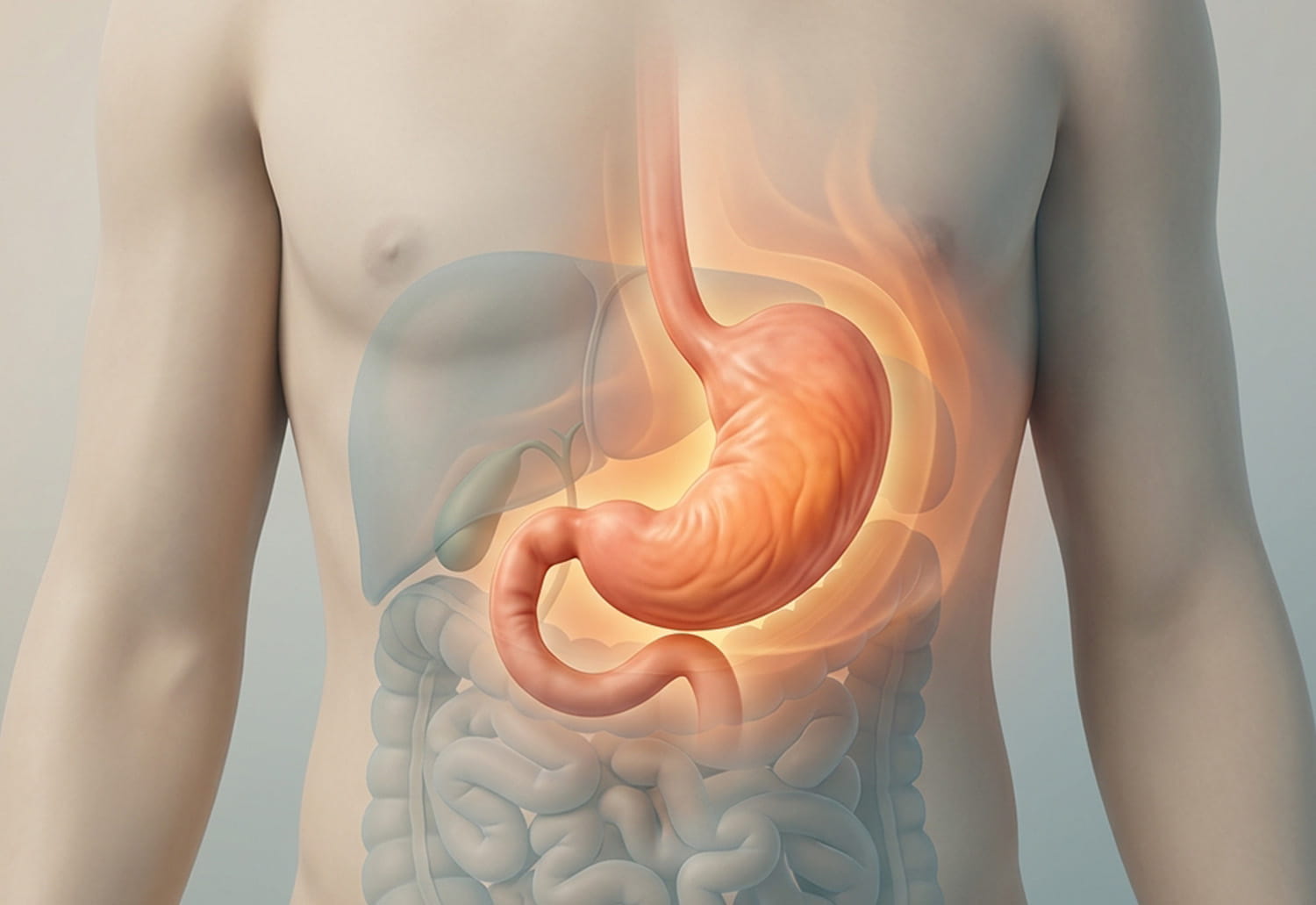
"Gastric stomach" is not a medical diagnosis. In Malaysia, the term is commonly used to describe a range of upper stomach symptoms that tend to appear around meals. These include burning pain, persistent bloating, nausea, or a sense of fullness that arrives before finishing a portion. The specific sensation varies from person to person, which is part of why it gets lumped under one catch-all label.
Clinically, these symptoms fall under a category called dyspepsia, which refers to recurring upper stomach discomfort without one single identifiable cause. Several different conditions can produce nearly identical feelings, and each has its own cause and treatment path. That is part of the reason why the same medication may relieve symptoms in one patient but not another.
The reason symptoms return is usually that the thing causing them has not been addressed. Short-term measures bring the discomfort down, but once they stop or the triggering circumstances return, so do the symptoms. Three specific reasons explain most cases.
Acid-reducing tablets, often called proton pump inhibitors or PPIs, work by lowering the amount of acid the stomach produces. They are effective while being taken. The issue is what can happen when you stop.
A 2024 review found that stopping long-term PPI use can cause the stomach to temporarily produce too much acid. This affected roughly 40 to 50 per cent of healthy volunteers after treatment ended. The discomfort that follows feels exactly like the original problem, even though it is medically a different reaction. Without a proper diagnosis, most people assume their original condition is back and restart the same tablet, and the cycle begins again.
Worsening symptoms after stopping acid tablets do not always mean the original condition has returned. A doctor can tell the difference between a temporary rebound reaction and a genuine recurrence.
Helicobacter pylori, or H. pylori, is a type of bacteria that lives in the stomach lining. It causes ongoing irritation, ulcers, and recurring upper stomach discomfort. It does not go away on its own. A specific course of antibiotics is needed. Antacids and dietary changes do not affect the bacteria itself.
A 2022 seroepidemiological study of Malaysian patients found H. pylori in 28.4 per cent of those tested, with symptoms continuing in patients where the infection was not fully treated. Without a follow-up test to confirm the bacteria has cleared, the irritation it causes will keep coming back regardless of diet.
Some recurring stomach discomfort has nothing to do with acid levels or an infection at all. A condition called functional dyspepsia occurs when the stomach does not expand properly as food arrives. It may also take longer than normal to move food along.
Research found these kinds of stomach movement problems in roughly 25 to 30 per cent of functional dyspepsia cases. Because the issue is physical rather than chemical, acid tablets tend to make little difference for these patients.
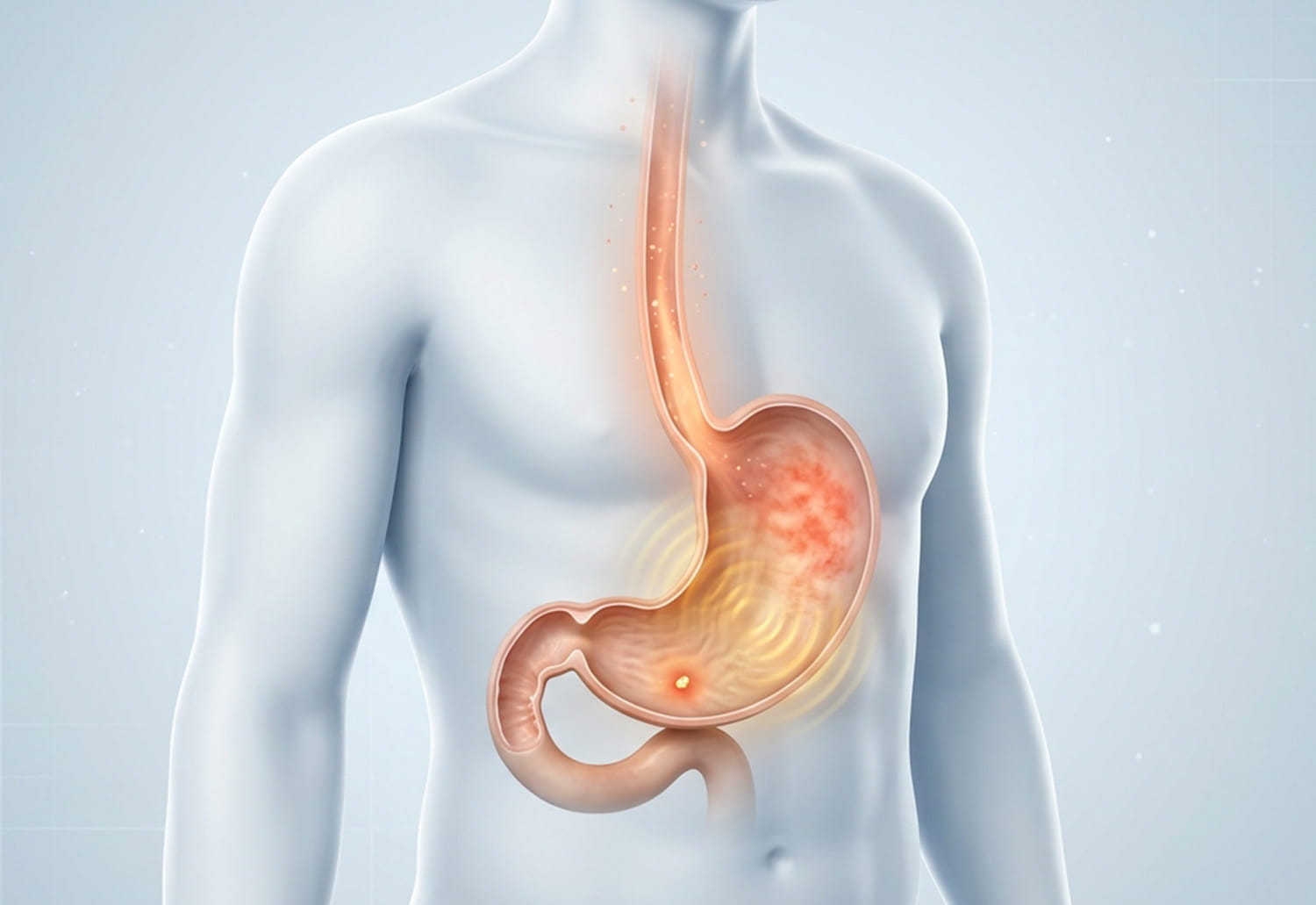
One reason recurring stomach discomfort is hard to self-manage is that several different conditions produce very similar symptoms. Here is how the main ones differ.
Acid reflux causes a burning feeling in the chest or throat, usually after eating or when lying flat. It happens when stomach acid travels back up into the food pipe because the muscle between the two is not closing properly. This is one of the more frequently reported gastrointestinal issues, particularly among people experiencing acid reflux Malaysia-wide.
Gastritis is irritation and inflammation of the stomach lining itself. The discomfort tends to feel dull and is centred in the upper stomach. It is most often caused by H. pylori bacteria or by taking anti-inflammatory painkillers such as ibuprofen over a long period.
Functional dyspepsia produces symptoms that look and feel almost identical to acid reflux and gastritis. The key difference is that a camera examination of the stomach shows no physical damage. It is thought to affect between 10 and 30 per cent of people worldwide. The condition is linked to the stomach being more sensitive than normal to fullness and pressure.
Peptic ulcers are sores on the stomach lining caused by H. pylori or anti-inflammatory painkillers. The pain is often gnawing or burning. Some people find it eases after eating; others find it worsens.
All four conditions can occur at the same time, and each one needs a different approach to treatment. Understanding why recurring gastric symptoms are not always what they appear is often the thing that changes the course of treatment.
Two people describing the same post-meal discomfort may have completely different conditions. The only reliable way to tell them apart is through proper testing.
When symptoms keep returning despite lifestyle changes and over-the-counter medication, a stomach specialist takes a different approach. Instead of treating the discomfort as it appears, the focus shifts to finding what is causing it.
A gastroenterologist starts by reviewing the patient's symptom history and current medication. From there, the right tests are chosen: a breath test to check for H. pylori, a camera examination of the food pipe and stomach lining, or tests that measure how the stomach moves food. Which of these is recommended depends on what the full symptom picture reveals.
A camera examination of the stomach, called a gastroscopy, gives a direct view of the lining. It can identify inflammation, ulcers, and physical changes that symptoms alone would never reveal. When the lining looks healthy, that finding itself guides the investigation toward functional causes rather than structural ones.

Most of the time, recurring gastric stomach discomfort points to a manageable condition: acid reflux, H. pylori infection, or a functional stomach problem. None of these is cause for alarm, but recurrence does indicate that the underlying cause has not yet been identified or addressed.
Persistent gastric pain lasting more than four weeks is worth discussing with a specialist. So is recurring bloating that does not settle, or worsening acid reflux Malaysia patients experience over time. Unexplained weight loss, difficulty swallowing, or blood in the stool need prompt attention regardless of duration.
When you stop taking acid medication, the stomach can temporarily produce more acid than usual as a reaction to no longer being suppressed. This can feel like the original gastric pain is back, but it is often a short-term response to stopping the tablets. A gastroenterologist can work out which one it is.
Yes. H. pylori bacteria cause ongoing irritation of the stomach lining, which can produce bloating, nausea, and upper stomach discomfort without ever forming a visible ulcer. A specific course of antibiotics is needed to clear it. Dietary changes and standard acid tablets alone will not.
It depends on what the symptom history points to. For most gastrointestinal issues of this kind, the doctor will likely request a breath test or to check for H. pylori, a camera examination of the stomach and food pipe, or tests that look at how the stomach moves food through. The specific tests used follow from what comes up in the initial consultation.
Functional dyspepsia is recurring upper stomach discomfort where a camera examination shows no visible damage to the lining. The stomach may not be expanding properly when food arrives, or it may be taking longer than normal to empty. Because the issue is physical rather than caused by too much acid, standard acid medication tends not to help.
Discomfort returning after meals for more than four weeks, or that is gradually getting worse, is worth discussing with a specialist. Symptoms such as unexplained weight loss, difficulty swallowing, or blood in the stool need prompt attention regardless of duration.
If the same stomach discomfort keeps coming back after every meal, it usually means the cause has not been found yet. The Gastroenterology & Hepatology team at Cengild provides specialist evaluation for recurring digestive symptoms, with H. pylori testing and camera examinations available on-site. If the pattern keeps repeating, a specialist appointment is a practical next step.
This article is for general educational purposes only and does not constitute medical advice. Please consult a qualified medical professional for assessment and treatment.