Shopping Cart
No item in your cart!
RM0.00
View Cart

by Ms Koh Bi Qi, Dietitian
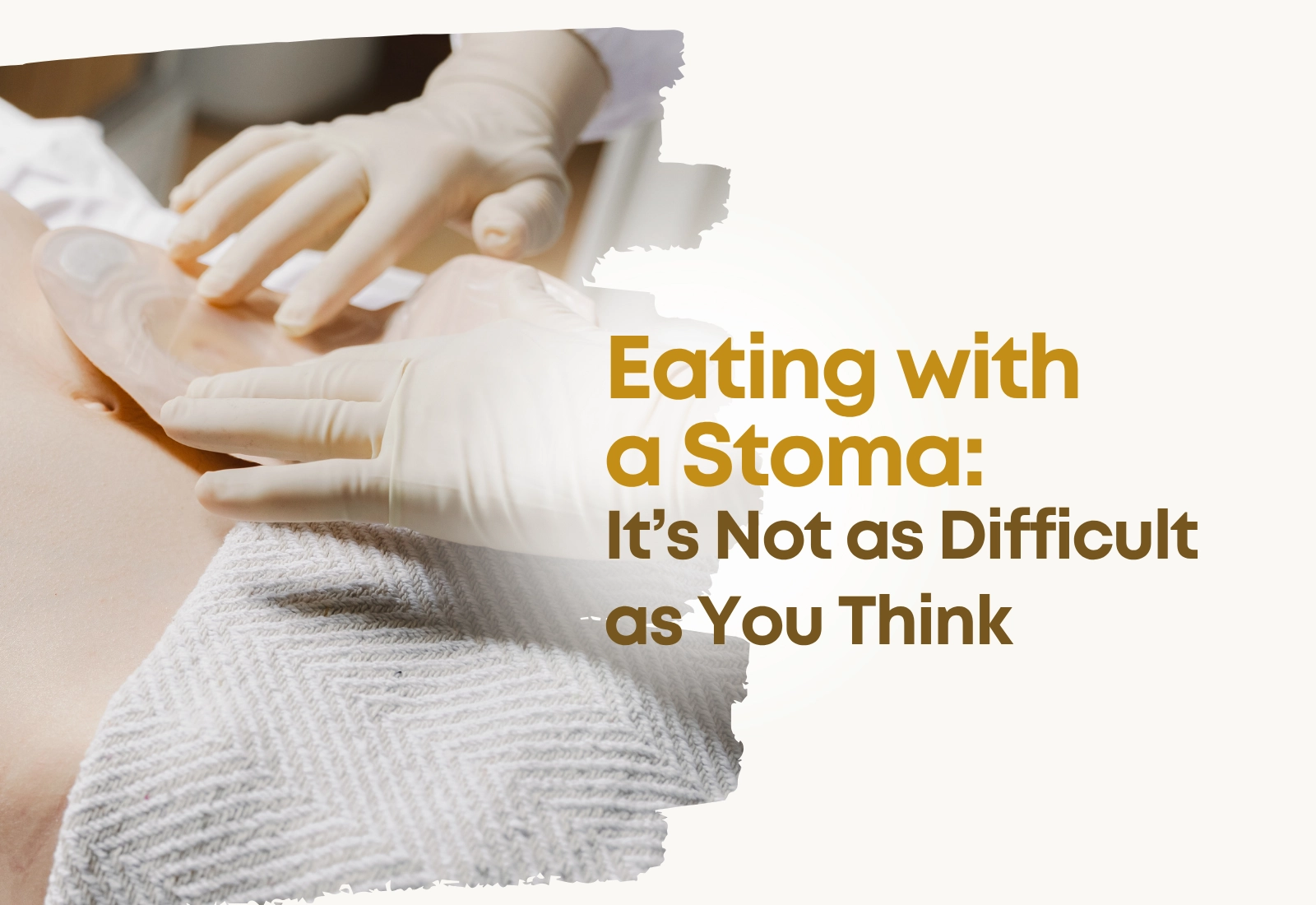
Eating with a Stoma: It’s Not as Difficult as You Think
Many people think that having a stoma (ileostomy or colostomy) comes with thousands of “don’ts”. In reality, it can be quite simple once you understand how it works.
A stoma is usually created for medical reasons that require the diversion of bodily waste (stool). Some people have an ileostomy (an opening from the small bowel), while others have a colostomy (an opening from the large bowel). While both may appear similar, the main difference lies in the consistency of the output. Ileostomy output tends to be more watery or pasty compared to colostomy output. Today, we’ll focus more on ileostomy.
The first rule in dietary planning for someone with an ileostomy is hydration. Since output is not easily controlled, it is important to maintain adequate daily fluid intake to prevent dehydration. However, not all fluids are suitable for rehydration. Beverages such as coffee, tea, sugary drinks and energy drinks may actually worsen dehydration. Caffeine has a diuretic effect, while sugary and energy drinks are hypertonic, which can increase stoma output. This happens because the body draws more fluid into the intestines due to the high sugar content. In cases of high-output stoma, it is important to replace lost salts using an oral rehydration solution.
The second key factor is fibre intake. Although the large bowel is bypassed in an ileostomy, maintaining a balance of soluble and insoluble fibre is still important for achieving optimal stool consistency. Too much insoluble fibre can increase stool bulk and may lead to blockage at the stoma. On the other hand, soluble fibre helps to thicken the output. Good sources of soluble fibre include barley, oats, peeled fruits and psyllium husk. Since the body cannot fully digest fibre—and most fibre fermentation normally occurs in the large bowel—you may notice some undigested food particles in the stoma output. This is normal.
While it may feel overwhelming at first, once you understand these two key dietary principles—hydration and fibre balance—you can confidently continue your daily life as usual.