Shopping Cart
No item in your cart!
RM0.00
View Cart

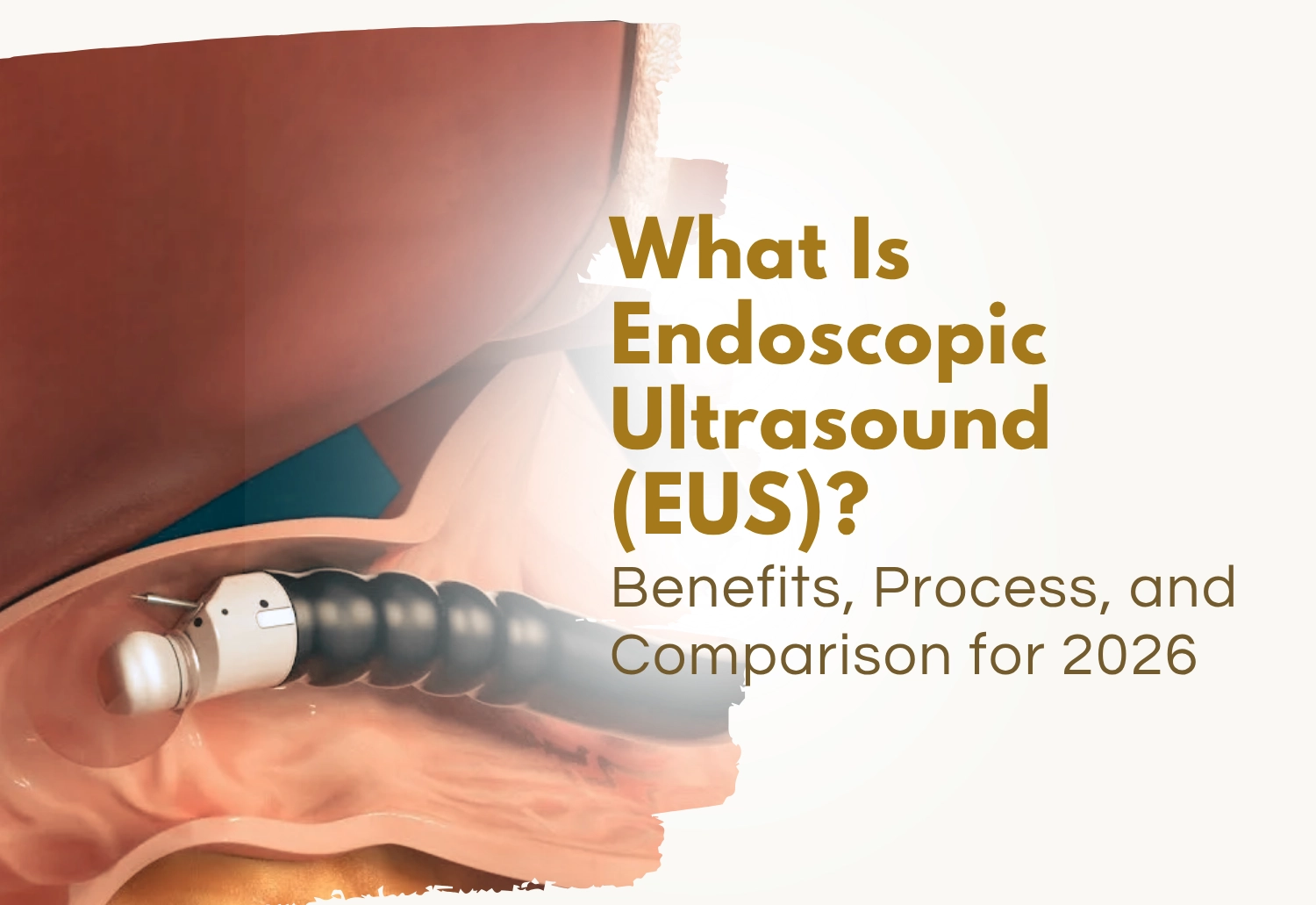
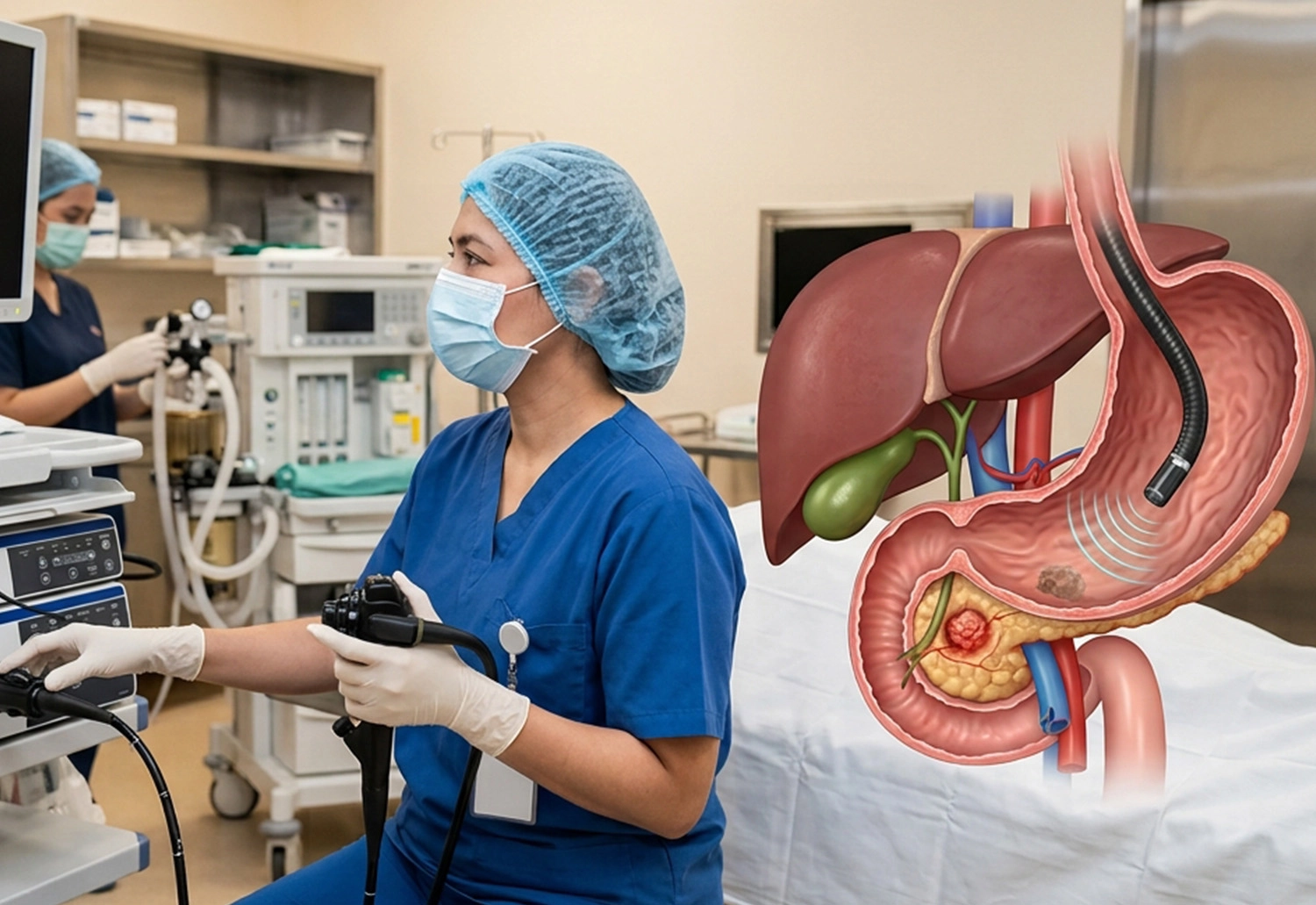
Endoscopic ultrasound achieves precise imaging results because it uses an ultrasound probe which tests areas close to internal organs to find small health issues that regular scanning methods cannot detect.
The diagnostic method provides support for early detection and disease progression assessment of pancreatic and gastrointestinal disorders through its diagnostic accuracy which ranges between 89.7% and 96.2%.
The procedure requires only a short time for completion because it takes between 30 to 60 minutes to perform and most patients can go home on the same day.
EUS lets doctors to perform real-time biopsy tests which helps them reduce their testing requirements while quickly developing treatment plans and obtaining diagnostic results.
The availability of EUS in Malaysia has increased because Cengild and other specialised centers now provide advanced diagnostic services which their expert doctors use to deliver complete patient care across different medical fields.
The modern diagnostic technique of endoscopic ultrasound lets doctors to examine the digestive system and adjacent organs with exceptionally accurate results. The procedure uses endoscopy and ultrasound together to produce detailed images which standard scanning methods cannot capture.
The specialised hospitals in Malaysia have expanded their ability to diagnose pancreatic and bile duct and gastrointestinal tract disorders through endoscopic ultrasound which has become a standard diagnostic tool for these conditions. The clinical journal data reports that EUS-guided tissue sampling achieves diagnostic accuracy between ~89.7% and 96.2%.
The guide presents complete information about the procedure which includes its operational details, recommended usage, expected patient experiences and its role in precise diagnosis and treatment planning.
Endoscopic ultrasound is a minimally invasive procedure that uses a flexible tube fitted with a camera and an ultrasound probe. The device enters through the mouth or rectum which depends on which body part needs to be inspected.
Unlike external imaging methods, this approach places the ultrasound probe close to internal organs. This allows doctors to capture clearer and more detailed images of:
The pancreas
Liver and bile ducts
Stomach and intestines
Lymph nodes
Doctors in Malaysia often use endoscopic ultrasound as a diagnostic procedure when CT scans or MRIs fail to deliver adequate results.
The understanding of this method in Malaysia shows its usefulness for doctors who need to diagnose different medical conditions.
Also Read: What Affects the Price of Endoscopy in Malaysia — A Patient’s Guide
The healthcare system in Malaysia now uses advanced diagnostic equipment to find diseases at earlier stages. Endoscopic ultrasound has gained importance as a medical procedure because people are becoming more aware about their digestive health and pancreatic diseases.
Here’s why it is relevant locally:
Early detection of cancer: The method lets doctors identify cancer cases at their initial stage which includes pancreatic and gastrointestinal cancers.
Accurate staging: The method allows doctors to determine the current stage of the disease which demonstrates its actual development.
Access to specialised care: Malaysian hospitals provide specialised medical services through their private and tertiary facilities which establish multiple access points.
Reduced need for surgery: The method eliminates the need for exploratory surgery in some situations because it provides sufficient examination results.
Diagnostic tests which patients and their families can trust help them better understand their situation during moments of doubt.
The advantages of this method help explain its frequent recommendation over other diagnostic examinations.
Doctors recommend this procedure because it generates comprehensive diagnostics which require only minor medical intervention.
Some notable advantages include:
High-resolution imaging: The technology detects tiny defects which other imaging systems fail to identify.
Guided tissue sampling: Patients can undergo fine-needle aspiration (biopsy) procedure in a single session because doctors can extract tissue from their body within one surgical visit.
Minimally invasive approach: The method requires no external incisions because it uses a minimal external incision technique.
Real-time results: Doctors receive test results during the examination which allows them to evaluate patient conditions right away.
Endoscopic ultrasound is the best option for doctors who need to diagnose complicated digestive disorders.
The test candidates will find the experience less challenging when they learn about the complete process from start to finish.
The doctor-operated tests become less stressful when patients understand their testing process.
You may need to fast for 6–8 hours
Inform your doctor about medications or allergies
Arrange for someone to accompany you home
You will receive sedation to stay relaxed
The doctor inserts the endoscope gently
Ultrasound images are captured in real time
If needed, a biopsy may be take
The entire process typically takes 30 to 60 minutes.
You will rest until the sedation wears off
Mild throat discomfort or bloating may occur
Most patients return home the same da
Malaysian hospitals provide their patients with detailed instructions to follow after their medical procedures.
The differences between this procedure and typical scanning methods become apparent through visual comparison.
Also Read: When Should You See a Stomach Specialist — Signs You Shouldn’t Ignore
To understand its value, here’s a simple comparison:
|
Feature |
Endoscopic Ultrasound (EUS) |
CT Scan |
MRI |
|
Image Detail |
Very high; captures fine structures and small lesions (as small as 2–3 mm), especially in the digestive tract and pancreas |
Moderate; detect major organ abnormalities but miss minor organ anomalies |
High; contains high sensitivity because it produces intricate soft tissue images, which researchers use to study liver, brain, and pelvic structures |
|
Biopsy Capability |
Yes; permits immediate guided tissue sampling (fine-needle aspiration/fine-needle biopsy), which happens simultaneously with the operation |
No; requires additional tissue extraction between different medical processes (e.g., CT-guided biopsy) |
No; biopsy must be performed separately under imaging guidance |
|
Invasiveness |
Minimally invasive; requires doctors to use an endoscope, which they must insert through the patient’s mouth or rectum while the patient receives sedation |
Non-invasive; uses X-rays to create outside images without requiring any patient contact |
Non-invasive; permits doctors to establish body imaging through magnetic fields and radio waves without needing to insert any equipment into the patient |
|
Real-time Imaging |
Yes; provides live imaging, allowing immediate assessment and guided interventions |
No; produces static images for later review |
No; images are captured and reviewed after the scan |
|
Best Use Cases |
Pancreatic and biliary diseases, bile duct stones, gastrointestinal stroma tumors, pancreatic cyst evaluation, and staging of pancreatic cancers |
Trauma assessment, lung imaging, detecting tumors or internal bleeding |
Soft tissue evaluation, brain, spine, liver, and complex organ imaging |
|
Radiation Exposure |
None; uses ultrasound waves |
Yes; involves ionising radiation |
None; does not use radiation |
|
Procedure Duration |
30–60 minutes, including preparation and recovery from sedation |
Usually 5–15 minutes |
Typically 20–45 minutes depending on the area scanned |
|
Availability in Malaysia |
Available in major private and tertiary hospitals with gastroenterology units |
Widely available across most hospitals and diagnostic centres |
Available in most advanced diagnostic centers and all tertiary hospitals |
CT scans and MRIs remain important, but EUS provides additional accuracy for specific digestive and pancreatic cases.
Patients who receive complete information still maintain their need to ask about two specific areas, which are safety and comfort issues.
The uncertainty before medical testing becomes a normal experience for people. Let’s address some frequent concerns.
Patients who receive sedation experience most pain as nonexistent. You will experience minimal pain after the procedure, which will quickly disappear.
Every medical operation carries minimal hazards that include:
Bleeding (rare, especially if a biopsy is done)
Infection (uncommon)
Reaction to sedation
Doctors in Malaysia follow strict safety protocols to minimise these risks.
Endoscopic ultrasound is considered a safe method when specialists with training perform it.
The newest medical diagnostic technologies allow doctors to recognise and treat complex medical conditions earlier than past methods permitted. The development of endoscopic ultrasound technology enables doctors to effectively treat patients who experience digestive or pancreatic disorders in Malaysia.
The doctor who recommended the procedure should be studied through dedicated research time because this will improve your preparation and confidence level. You should have a conversation with your doctor to ask them questions while you need to follow their medical advice exactly.
If you’ve been advised to undergo an endoscopic ultrasound, choosing a trusted medical centre can make the experience more reassuring. At Cengild, a dedicated team of 30+ experienced doctors across 18 specialties focuses on digestive, liver, and pancreatic care.
Our Gastro & Liver Centre brings together gastroenterologists, hepatologists, and GI surgeons who work closely to provide accurate diagnosis and minimally invasive treatment options.
With advanced diagnostic technology and a strong focus on early detection, patients receive clear guidance from consultation through recovery. From common digestive concerns to more complex conditions, care is customised to each individual’s needs in a well-equipped, patient-focused setting.
Call +603-2242 7000 (General Line/WhatsApp) or the Emergency Line at +603-2242 7041, speak with our specialist or book a consultation today.
EUS allows doctors to assess both the digestive system and the surrounding organs. The procedure identifies tumors and cysts and inflamed areas and other medical conditions which standard imaging methods fail to show.
Patients experience rapid recovery times. Most patients can return home on the same day while their body functions normally within 24 hours, depending on sedation effects.
It requires an evaluation of the patient's medical situation. EUS provides more detailed images of certain organs and allows for biopsies which CT scans cannot do.
Yes. The use of sedation requires patients to have a family member or caregiver present for their home transportation after the procedure.